
By Vedh Ramesh.
Climate change is an extremely pressing issue, with far-ranging effects that will irreparably harm this planet and everyone living on it — however, not everyone is affected equally, with developing nations disproportionately affected. According to the World Bank, “[a]bout 80% of the global population most at risk from crop failures and hunger from climate change are in Sub-Saharan Africa, South Asia, and Southeast Asia”.1 Although it affects some more than others, that does not mean there are people unscathed by food shortages caused by climate change. According to a National Academy for Sciences report cited by Columbia University, “for every degree Celsius that the global thermostat rises, there will be a 5 to 15 percent decrease in overall crop production.” 2 The Secretary General of the United Nations (António Guterres) said “that climate-related disasters and extreme weather were a driver of global hunger and that 1.7 billion people have been affected by the climate crisis over the last decade.” 3 With the global population increasing (by 2050, the FAO estimates that crop production will need to increase “by at least 60 per cent” 4) and rising temperatures decreasing crop yields worldwide (NASA predicts that corn yields are projected to decline 24% by 2030 due to climate change5), the number of people affected will only rise, and the magnitude of disasters will continue to climb. There can be no question that food shortages induced by climate change — and by extension, climate change in general — are among the most pressing and urgent issues facing us today, and warrant immediate action.
One potential course of action to alleviate the shortages caused by climate change is for countries to export crops to nations who are experiencing or near a famine relative to their greenhouse emissions. For example, the PRC is by far the largest emitter of carbon dioxide in the world, with their emissions making up for 27% of the global total.6 If a country were to be experiencing a famine, a United Nations panel comprised of members from nations across the world would determine to what extent the famine was caused by or amplified by climate change, and to what extent greenhouse gas emissions played a factor in it. If, for example, the panel found that greenhouse gas emissions were responsible for reducing the crop yield in one country by 30%, then it would fall upon the rest of the world to make up for that yield in food aid. The PRC, being the largest emitter of greenhouse gases at 27% of the global total, would have to send enough food aid to make up for 27% of the 30% disparity in crop yield. This pattern would continue for all countries — the United States, being the second largest emitter at 15%6 of the global total, would send enough food aid to make up for 15% of the 30%, and so on. This will help ensure that the countries that are most responsible for the shortages in food due to climate change will foot the heaviest bills. For any countries that cannot send food aid (this could be due to a number of factors, such as a country which does not produce an agricultural surplus), they would have to send enough money to cover the cost of either buying more food from other countries or sending enough money for the country to improve its methods of agriculture, increasing crop yields even in the face of natural disasters. It must be noted that this proposition relies on the goodwill of various countries. To counter this, however, many nations have already done things similar to this, though not on this scale. For example, according to the OECD, US $4.7 trillion (adjusted for inflation) has been sent to Africa alone by many developed nations, much of which is in the form of food aid. Africa is perhaps one of the most at risk areas for food shortages induced by climate change, so in many ways, developed countries sending food aid to Africa is in a way, an implementation of this possible solution.a
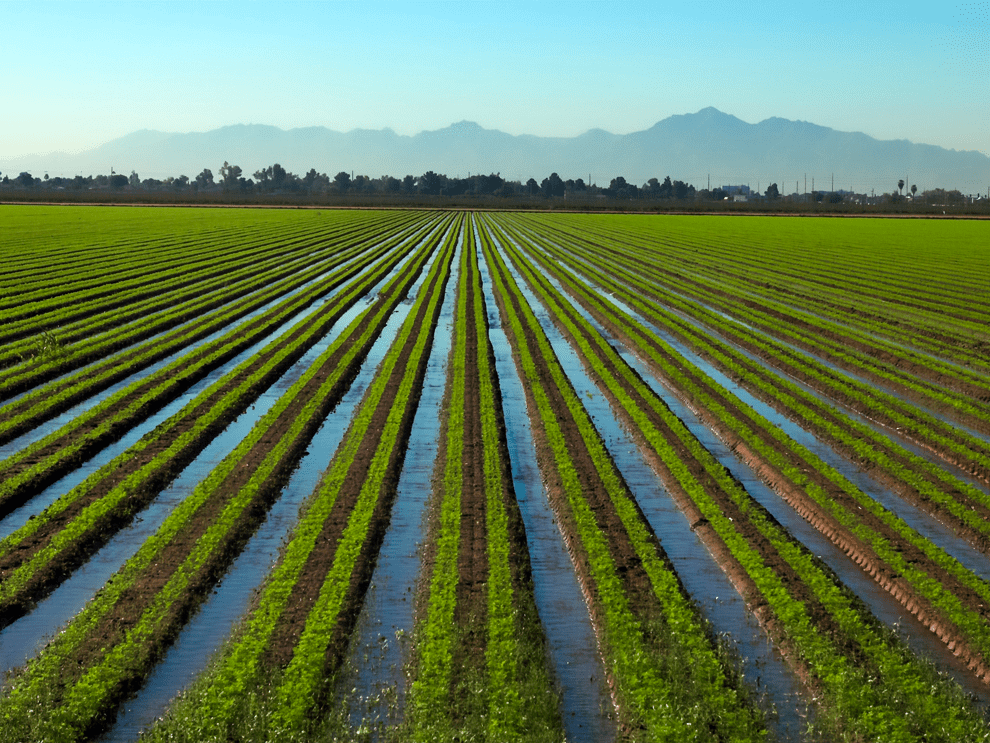
Another potential solution would be to improve methods of farming and spread awareness of new farming techniques which would increase crop yields even in the face of changing global temperatures and natural disasters exacerbated by climate change. This would include giving farmers access to better irrigation technologies so as to allow for crops to be grown with less water, since droughts caused by climate change are among its most visible impacts. Another portion of this could include improving soil health6, since according to the World Bank, “[i]ncreasing organic carbon in soil helps it better retain water and allows plants to access water more readily, increasing resilience to drought” while also “provid[ing] more nutrients without requiring as much chemical fertilizer — which is a major source of emissions.” This would not only protect crops against the effects of climate change, but it would also reduce the impact on climate change that farmers have — according to the United States Environmental Protection Agency, 24% of global greenhouse gas emissions come directly from agriculture and livestock raising.7 This number does not include the “CO2 that ecosystems remove from the atmosphere by sequestering carbon in biomass, dead organic matter, and soils”,7 and the role agriculture plays in contributing the climate change cannot be denied or passed off as negligible. This would increase crop yields while also decreasing the greenhouse gas emissions that the agricultural sector produces.
1 — World Bank — What you need to know about food security and climate change
2 — Columbia University — How climate change will alter our food
3 — UN — Secretary-General’s remarks to the Global Food Security Call to Action Ministerial
4 — United Nations — The World’s Food Supply is Made Insecure by Climate Change
6 — Our World in Data — CO2 emissions
7 — EPA — Global Greenhouse Gas Emissions Data
a — OECD — QWIDS

 Living Ethics Journal
Leave a comment