
By Vedh Ramesh.
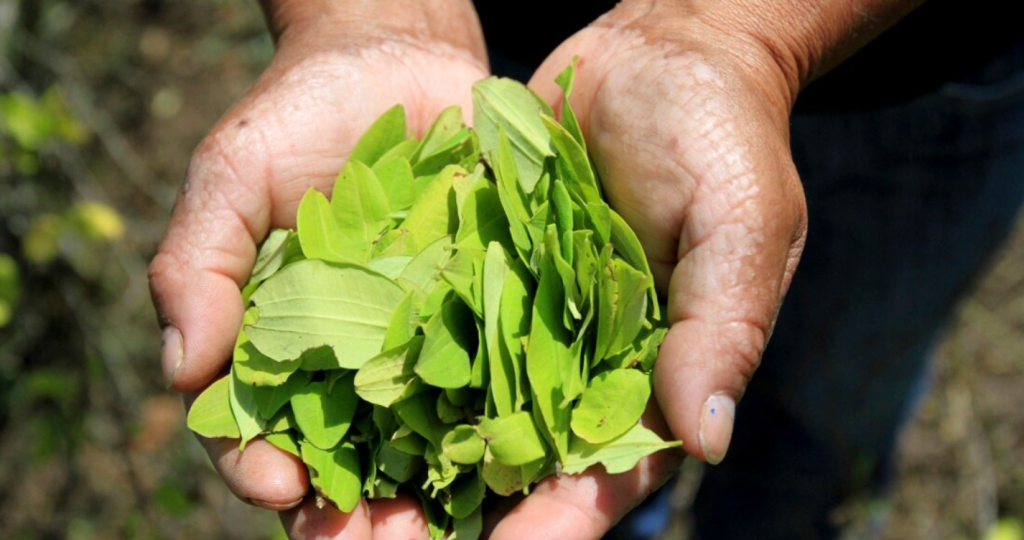
Colombia is the world’s largest producer of cocaine by far — in 2004, Colombia was responsible for 80% of the world’s cocaine production.1 In 2012, cocaine made up 0.2% of Colombia’s total GDP, or almost US$750 million.2 The UNODC “estimates that 63,660 of the country’s households were involved in the cultivation of [coca]”,3 which are the plants from which cocaine is obtained. These numbers are all over a decade old. According to new estimates, the increase in coca production combined with rising cocaine prices worldwide have led to exponential growth in Colombia’s cocaine industry, and the former finance minister of Colombia estimates that “cocaine production generated between US$8 billion and US$12 billion last year”,4 or between 2.6% to 4% of Colombia’s GDP. “[T]he area of coca cultivation expanded to… 204,000 hectares (504,100 acres)”5 in 2021, which is the largest coca crop area since the UNODC began collecting data on this issue.6 The rise in cocaine production has been fueled by the end of an aerial fumigation program, which aimed to eradicate coca plants by spraying them with a chemical glyphosate — however, glyphosate also has negative impacts on the surrounding environment and on the people living there, which was why the program was discontinued.7 The rise in coca production is accompanied by the growth of drug trafficking cartels and organized crime, both of which are harmful to Colombia and its people. The production of cocaine in Colombia continues to be an issue despite the best efforts of Colombia and the international community, including the UNODC.
One potential solution to solve this issue would be to focus on lifting the farmers of Colombia out of poverty. The regions of Colombia with the most coca production are the areas which have the most farmers, and farmers disproportionately suffer from monetary poverty compared to the entirety of Colombia — according to the World Bank, 35.7% of Colombians are under the poverty line,8 while 45% of farmers are under the poverty line, and that 45% mostly consists of small and medium farmers.9 Many farmers choose to grow coca as collection and payment of the crops is performed regularly by the Revolutionary Armed Forces of Colombia (abbreviated as FARC as per its Spanish translation), who use coca to fund their guerilla movement against the Colombian government.10, a By helping farmers out of poverty, they will no longer turn to coca as a means to sustain themselves, and they can turn to other crops which can be sold or exported, assisting Colombia’s economy. One way the delegation of Ukraine believes that would be effective and economical at helping farmers out of poverty would be to improve access to farming technologies and fertilizers. Doing so would allow farmers to increase their production while simultaneously keeping their costs low, allowing the farming of crops other than coca to become viable.
Another solution to help solve this issue would be to target the coca and cocaine traffickers instead of attempting to eradicate the crop itself. Destroying crops often harms only the farmers, while the traffickers and guerilla fighters continue unchecked. To remedy the problem of traffickers, the delegation from Ukraine advises the UNODC to advise Colombia to focus on eliminating the presence of the FARC guerillas who purchase much of the coca from Colombian farmers. Without any way for the farmers to sell their coca crop, they will stop producing it, as there is no demand for it. Furthermore, the delegation from Ukraine advises that the government of Colombia provide assistance to farmers in growing new crops to further facilitate the transition away from coca production. In 2016, the government started a program aiming to do this,11 but the program was abandoned and 50% of farmers whose coca crops were exterminated simply returned to producing coca.12 By urging the Colombian government to resume the program of giving farmers assistance to transition away from coca production and moving away from eradicating the croplands of coca plants, while striving to eliminate the presence of the remnants of FARC,a the delegation from Ukraine believes that the situation in Colombia will be significantly alleviated.
1 — Ann C. Mason. “Internal Armed Conflict”. In Hudson, Rex A. (ed.). Colombia: A Country Study. Library of Congress Federal Research Division (2010). page 330-333
2 — “Colombia Grows Quarter Less Coca Crop, According to UNODC 2012 Survey.” United Nations : Office on Drugs and Crime, https://www.unodc.org/unodc/en/frontpage/2013/August/colombia-grows-quarter-less-coca-crop-according-to-unodc-2012-survey.html.
3 — “Colombia.” United Nations : Office on Drugs and Crime, https://www.unodc.org/unodc/en/alternative-development/colombia.html.
4 — “Colombia’s Estimated Cocaine Exports Highest in History of Drug Trade.” Colombia News | Colombia Reports, 13 June 2021, https://colombiareports.com/amp/colombias-cocaine-export-estimates-highest-in-history-of-drug-trade/.
5 — “Colombia Cocaine: Un Reports Record Coca Crop.” BBC News, BBC, 20 Oct. 2022, https://www.bbc.com/news/world-latin-america-63339203.
6 — “Colombia Breaks Cocaine Production Record.” France 24, France 24, 21 Oct. 2022, https://www.france24.com/en/americas/20221021-colombia-breaks-coca-growing-record-us-led-war-on-drugs-failure-says-govt.
7 — Nayar, Jaya. “Aerial Fumigation in Colombia: The Bad and the Ugly.” Harvard International Review, Harvard International Review, 9 Dec. 2020, https://hir.harvard.edu/aerial-fumigation-in-colombia-the-bad-and-the-ugly/.
8 — World Bank (n.d.). Poverty & Equity Brief: Colombia. World Bank Data Files. Retrieved March 7, 2023, https://databankfiles.worldbank.org/public/ddpext_download/poverty/987B9C90- CB9F-4D93-AE8C-750588BF00QA/AM2020/Global_POVEQ_COL.pdf.
9 — “Colombia.” ALIGN, https://align-tool.com/source-map/colombia.
10 — Hinteregger, Tess. “How Poverty Is Influencing Coca Cultivation in Colombia.” BORGEN, 7 Sept. 2017, https://www.borgenmagazine.com/influencing-coca-cultivation-in-colombia/.
11 — Dickinson, Elizabeth. “Opinion: To End the Drug War, Help Coca Farmers Find a Way Out.” NPR, NPR, 5 Mar. 2021, https://www.npr.org/2021/03/05/972469104/opinion-to-end-the-drug-war-help-coca-farmers-find-a-way-out.
12 — “Colombia Cocaine: Un Reports Record Coca Crop.” BBC News, BBC, 20 Oct. 2022, https://www.bbc.com/news/world-latin-america-63339203.
a — In 2017, much of FARC disbanded and handed their weapons in to the United Nations, but a significant portion of them, called the Carlos Patino Front, have refused to lay down their weapons and have continued their coca purchasing & trafficking.

 Living Ethics Journal
Leave a comment