
By Vedh Ramesh.
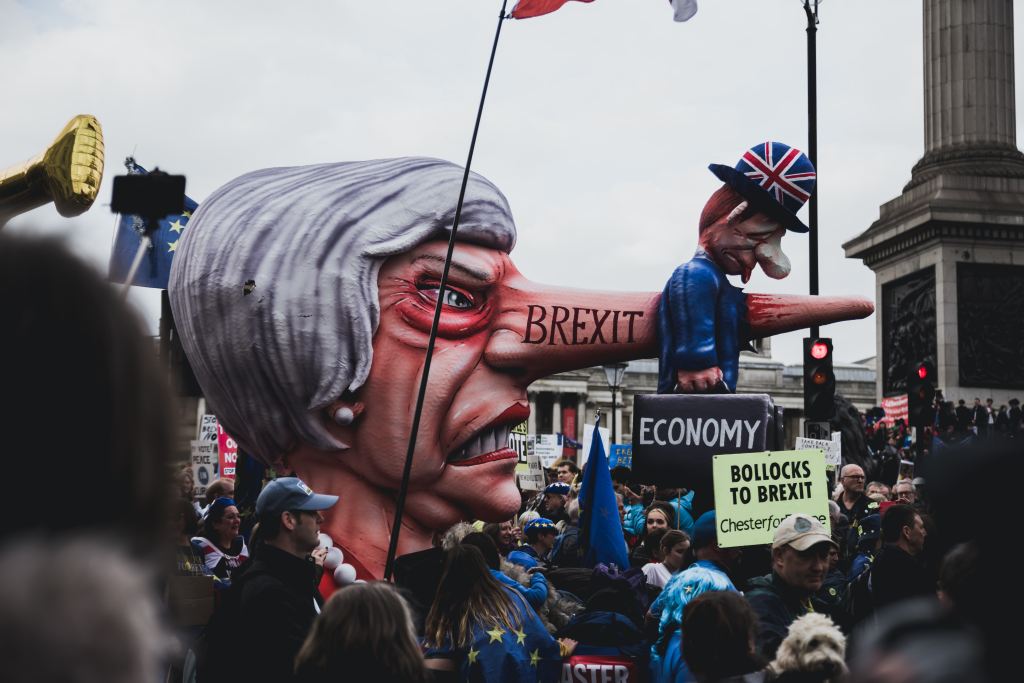
On 23 June 2016, the citizens of the UK voted to leave the European Union (EU) by a vote of 51.9% to 48.1%, authorizing the UK to leave the organization, having joined its predecessor, the European Economic Community (EEC) in 1973.1 It took until 31 January 2020 for the UK to officially leave, and the process was long and protracted, messier than expected. Part of the reason it took so long was because the negotiations regarding the withdrawal agreement (officially, The Agreement on the withdrawal of the United Kingdom of Great Britain and Northern Ireland from the European Union and the European Atomic Energy Community) took longer than expected, and the ratification process was slowed. The goal of the agreement was to govern trade agreements, tariffs, and to provide a framework for economic cooperation, yet this did not pan out as expected.2 The withdrawal reinstated customs checkpoints, leading to delays at the border and increased amounts of paperwork (causing supply chain disruptions);3 and differences in regulatory standards and licensing requirements, leading to products needing to comply with both the UK’s standards and the EU’s standards (further hampering the free market).
One potential solution to this would be to renegotiate standards to a common one. This would not be a simple solution, but it would have the most long-term benefits to both parties. For example, the EU’s regulatory code regarding cabbages runs to about 1,800 words.4 Such regulations cannot possibly do anything but inhibit imports and exports between the two parties. A prospective approach to this would be to have firms submit a request to a joint committee created by the UK and the EU to review their respective standards, and for the committee to negotiate standards to become common between the two. Regulations need not be decreased in size; this solution only proposes modifying existing standards. An alternate version of this solution could include—instead of renegotiating all standards—simply holding dialogues to expedite the conformation of goods in both markets in only the areas most affected by Brexit, such as agriculture and the financial sector.5 The specific agreements that will have to be tailored to affect the financial sector include “equivalence” agreements.6 Equivalence agreements, in essence, “[are systems] which can be used to grant domestic market access to foreign firms in certain areas of financial services.”6 There is not yet a comprehensive equivalence agreement in place between the UK and the EU, but should one be reached, then the financial sector will be considerably better off.
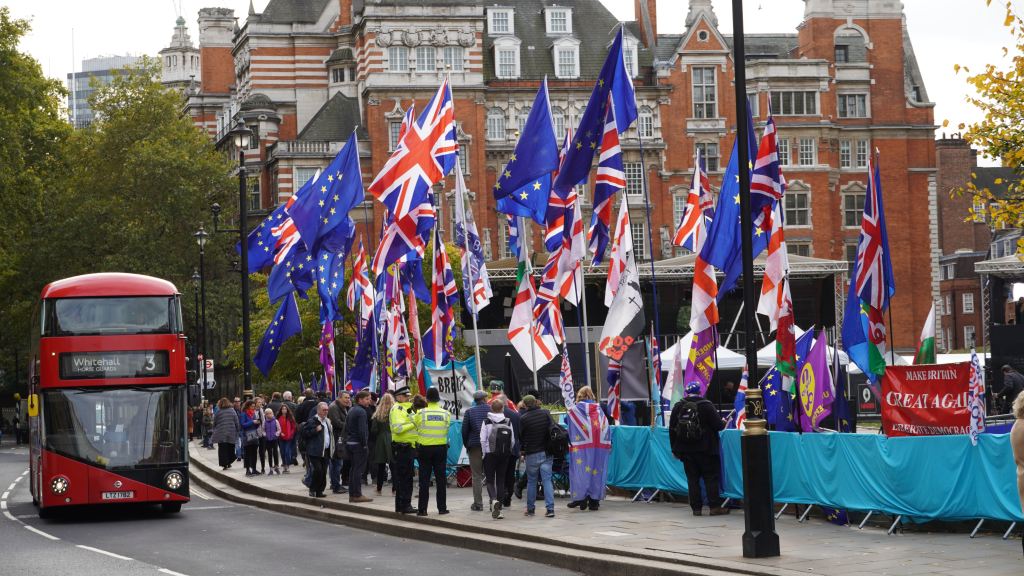
Another potential solution to this would be to focus on the customs aspect. If import and export agreements were to be refined, the paperwork necessary to process these at airports and border crossings (through the Chunnel and on the Irish border) would decrease, lowering the time it takes to pass border checkpoints, streamlining the process and decreasing disruptions to the supply chain. This is only one aspect that can be improved upon—there are a plethora of others as well. If firms in the UK were to become Authorised Economic Operators (AEOs) of the EU and vice versa (essentially a program where selected, pre-vetted firms that have consistently met customs and security regulations, transparency requirements, and are in a healthy financial state are stopped with minimal intrusion at the border7), the supply chain would not be nearly as affected as it is now and barriers to entry will be lowered, allowing for greater economic freedom.
1: “EU Referendum Results.” Electoral Commission | EU Referendum Results, 2016, web.archive.org/web/20160630063455/https://www.electoralcommission.org.uk/find-information-by-subject/elections-and-referendums/upcoming-elections-and-referendums/eu-referendum/electorate-and-count-information.
2: “Consequences of Brexit.” European Commission, commission.europa.eu/strategy-and-policy/relations-non-eu-countries/relations-united-kingdom/new-normal/consequences-brexit_en. Accessed 4 Jan. 2024.
3: Fella, Stefano. “The EU Entry/Exit System and EU Travel Authorisation System.” House of Commons Library, United Kingdom House of Commons, 18 July 2023, commonslibrary.parliament.uk/the-eu-entry-exit-system-and-eu-travel-authorisation-system/.
4: “COMMISSION REGULATION (EC) No 634/2006 of 25 April 2006 Laying down the Marketing Standard Applicable to Headed Cabbages and Amending Regulation (EEC) No 1591/87.” European Union, eur-lex.europa.eu/legal-content/EN/TXT/?uri=celex%3A32006R0634. Accessed 4 Jan. 2024.
5: Scott, Michelle P. “Brexit: The Winners and Losers Following the Deal.” Investopedia, Investopedia, 4 Oct. 2023, http://www.investopedia.com/news/brexit-winners-and-losers/.
6: Shalchi, Ali. “‘Equivalence’ with the EU on Financial Services – the House Of …” House of Commons Library, House of Commons, 19 Nov. 2020, commonslibrary.parliament.uk/equivalence-with-the-eu-on-financial-services/.
7: “What Is AEO?” Taxation and Customs Union, European Commission, taxation-customs.ec.europa.eu/customs-4/aeo-authorised-economic-operator/what-aeo_en. Accessed 4 Jan. 2024.

 Living Ethics Journal
Leave a comment