
By Lukas Kraft.
Climate change is a global problem that has been fiercely debated in international, national, and local level politics for its massive potential ramifications on the world’s ecosystems and human populations. Before 1962, the climate crisis was little debated and discussed in the public eye. This changed with the publication of author Rachel Carson’s book, Silent Spring. The book addressed issues of how humans are affecting our surrounding environments and led to an increase in discussion of environmental science and the danger we can pose to the world if left unchecked. Still, the climate activist movement would not begin until the late 1980s and early 90s. With the increased discussion of how human interactions affect the natural environment came increased research and scientific studies on climate change. But still, activists and scientists in the US lacked the proper technology and communication platforms to effectively broach the subject of climate change to the mass media and public politics. There were spurts and bubbles of activism breaking through before the 80s such as the Clean Air and Water Act and follow-up laws and regulations which were passed throughout the 1960s. However, real conclusive data and large public backing of organizations and funding were lacking, and therefore the movement could not make any significant changes to the world.

In the late 1980s, with public outroar steadily growing for the protection of our natural environments and the world, significant organizations that were at the forefront of the world stage started to be noticed. Most notable of these organizations was the United Nations, or UN. The UN created two branches called the UNFCCC or United Nations Framework Convention on Climate Change and UNEP or United Nations Environmental Programme, to deal with keeping climate change to a minimum and keeping the global temperature from rising higher. The result was an increase in international environmental climate change treaties, agreements, research, and theory. With the increased political pressure on countries to either join the UNFCCC and UNEP or face alienation on the world stage came growing pressure on the scientific community to come up with sound science and research to back new policies and climate action. What they found was that since the industrial revolution (1850-1900), global warming had raised the global annual average temperature close to 1.1ºC (Climate Change Widespread). This rise in temperature can be attributed to harmful carbon and greenhouse gas emissions, which are primarily released in large metropolitan areas with a high density of industry, fossil fuel-intensive transportation, compact infrastructure with little green spaces, and high populations. While some leading environmental scientists and researchers state that we should focus climate mitigation on the national level, others more realistically argue that we should focus more precisely on urban municipal-level carbon mitigation where local-level city regulations and state laws can more efficiently and effectively reduce carbon and greenhouse gas emissions. Ultimately, cities should improve carbon neutrality and reduce their carbon footprint through the incorporation of renewable energy sources, sustainable practices, and data-driven action because cities produce the majority of the world’s carbon and greenhouse gas emissions (C&GHG emissions) which is resulting in many negative outcomes such as annually increasing global temperature, receding and melting ice caps, rising sea levels, increasingly erratic weather patterns, and habitat destruction, all of which threaten human life and our planet’s balanced ecosystems.
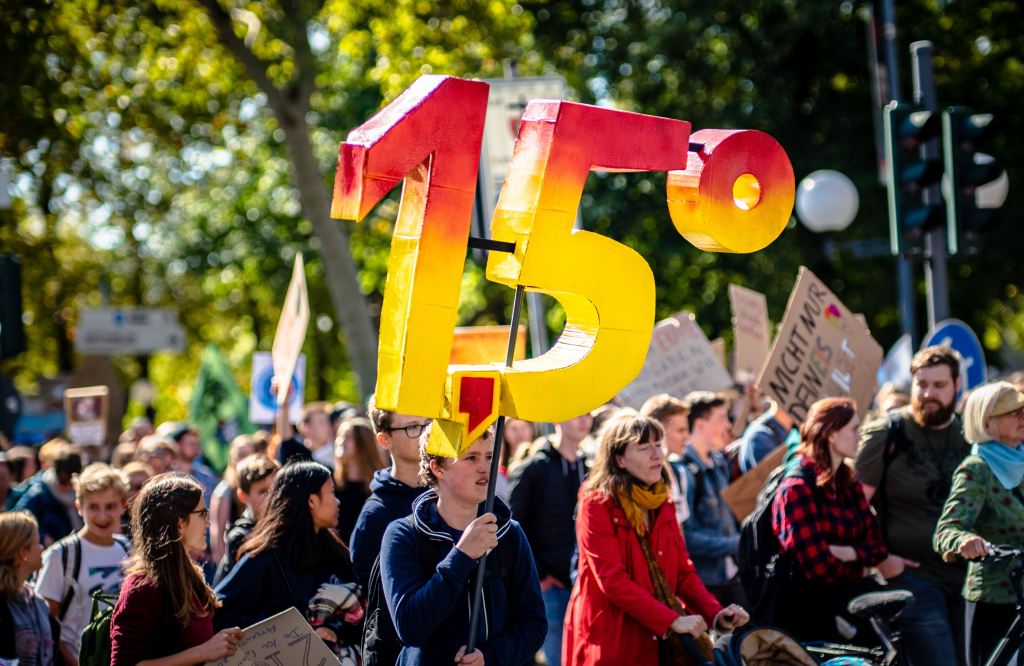
At the root of all of these issues are human-related C&GHG emissions. Large amounts of C&GHG emissions cause the greenhouse effect, an effect caused when gasses like CO2 absorb the infrared energy reflected off of the earth from the sun and then re-emit that energy back out as heat, half back to space and the other half to earth (Fecht). Therefore, with high concentrations of CO2 and GHGs in our environment, more energy will be re-emitted into our atmosphere, effectively trapping the energy as heat and warming our planet. The rate and level at which we are emitting C&GHGs into our atmosphere is resulting in the rising of global temperatures, which sets off a catastrophic chain of events. According to research conducted by and summarized in an article from the IPCC, another sub-branch of the UN that works to scientifically analyze the effects and solutions of climate change, since the industrial revolution (1850-1900), human-related emissions and climate pollution have accounted for a 1.1ºC average annual rise in global temperatures. In the same report, the IPCC stated that the recent rise of global temperature is, “unprecedented in thousands, if not hundreds of thousands of years” and came to the conclusion that “unless there are immediate, rapid and large-scale reductions in greenhouse gas emissions, limiting warming to close to 1.5°C or even 2°C will be beyond reach” (Climate Change Widespread). This suggests that we must take action. We must work to limit our carbon emissions because the effects of climate change are detrimental to our planet’s flora & fauna, general environment and ecosystem processes, and livability of the planet’s harsh deserts and low-lying coastal regions.
Scientists have observed how the high levels of C&GHG emissions we have caused have resulted in not only a large increase in average temperature but also in a domino effect where one cause leads to another, each of which destroying another part of our planet’s ecosystems (Vetter). The high temperatures also cause the receding and melting of icecaps and glaciers all over the world, which in turn raises ocean levels as ice and snow are melted into water. The resulting water can cause flooding, erosion, and destruction to the habitat of polar and glacial ecosystems which support life that is adapted to the cold and icy terrain, not a warm slushy landscape. With the water runoff from icecaps and glaciers comes rising sea levels and temperatures in the ocean. Some negative results of a rising sea level are that coastal communities and island nations all over the world are facing shrinking coastlines and advancing waterfronts that threaten existing coastal infrastructure like tourism (both oceanic and mainland recreation). Furthermore, rising sea levels put coastline housing and buildings at risk of flooding and being battered by increasingly erratic weather patterns and tropical storms (IE Hurricane Katrina and its destructive flooding). Additionally, rising ocean levels are harming the ocean ecosystem, as with an increase in ocean height comes increased coastal runoff (erosion), which heaves sediments into the ocean and increases the turbidity of the water. This can lead to greater heating of the ocean by the sun and increased struggles for aquatic flora and fauna to thrive. All of these negative impacts of climate change hurt our natural resources and can threaten cities with physical, environmental, and economic damage.
The world’s oceans are also carbon sinks, meaning that they absorb a lot of carbon and play an integral role in the carbon cycle. A recent special report from the IPCC on the effects of climate change on ocean ecosystems affirmed that the ocean has “very likely” absorbed “between 20-30% of total anthropogenic emissions in the recent two decades” through aquatic plant life and phytoplankton (Technical Summary — Special Report). While this does work to slow global warming it also causes a process dubbed ocean acidification, where all of the absorbed CO2 lowers the ocean’s pH level, which harms growth rates and the structural integrity of coral reefs (US Department of Commerce). Coral reefs are important to ocean biodiversity as they are reservoirs of biodiversity and habitat for many unique species, but oceans are also important to the human tourism business which attracts massive economic revenue to coastal communities that have come to rely upon the business to support their families. Research conducted by The National Conservancy (TNC), an established environmental advocacy, conservation, and research group, and supported by industry giants such as Jett Blue and Microsoft recently concluded that the Caribbean’s economy is heavily dependent on tourism and travel business, specifically coral reef and beach vacations. With a whopping “15% of [the Caribbean’s] GDP and 13.2% of [the] jobs in the region” depending on these sectors, any harm to these reefs and beaches could cause massive job loss and instability in Caribbean countries (Spalding). This data can be extrapolated and applied to the international level for all coastal and island nations that depend heavily on eco-tourism and ocean ecosystems to support their local citizens financially. If the ocean beaches and coral reefs are harmed or destroyed, so are roughly 15% of these countries’ GDP. Therefore it is not only beneficial in supporting the local ocean ecosystems, but also to coastal nation economies and survivability to invest in climate mitigation, adaptation, policies, and action.
While some may point to credible sources like UC Berkeley and National Geographic to argue that the science shows that some animals are evolving to meet the changing climate, not only does this overlook the crucial fact that the examples used are mere outliers, but it also attempts to shift the blame off of humans and present a faulty solution that does not and will not apply to the majority of species. Similarly, these climate deniers, as they are commonly called, would be overlooking key phrases and comments listed by the authors as well as the researchers that argue that while these are important steps that show how some animals are reacting to climate change, it is not indicative to all the species of the world (Warming to Evolution). Ultimately when it comes to climate change’s effects and human-related C&GHG emissions we should not try to escape the problems we caused by arguing that natural selection and evolution will solve it all. We know that the planet is warming, we know that it is warming at an alarming rate, and we know that it is harming our natural ecosystems which in turn can harm already established big tourism businesses, like coral reef-based vacationing, established coastal infrastructure and housing, and lastly cause worse flooding and storm surge for cities. So let’s figure out how we can reduce the human impact of harmful emissions so that we can not only save our planet.
Works Consulted
About the Secretariat | UNFCCC. https://unfccc.int/about-us/about-the-secretariat.
Arias, Paola A., et al. Technical Summary. https://www.ipcc.ch/report/ar6/wg1/downloads/report/IPCC_AR6_WGI_TS.pdf.
Biodiversity and Health. https://www.who.int/news-room/fact-sheets/detail/biodiversity-and-health.
Climate Change | UN-Habitat. https://unhabitat.org/topic/climate-change.
“Climate Change Evidence: How Do We Know?” Climate Change: Vital Signs of the Planet, https://climate.nasa.gov/evidence.
Climate Change: Global Sea Level | NOAA Climate.gov. http://www.climate.gov/news-features/understanding-climate/climate-change-global-sea-level.
Climate Change Widespread, Rapid, and Intensifying – IPCC — IPCC. https://www.ipcc.ch/2021/08/09/ar6-wg1-20210809-pr/.
“Climate Movement – Wikipedia.” Wikipedia, 12 Feb. 2023. Wikipedia, https://en.wikipedia.org/w/index.php?title=Climate_movement&oldid=1138975988.
Cutting Global Carbon Emissions: Where Do Cities Stand? 5 Jan. 2022, https://blogs.worldbank.org/sustainablecities/cutting-global-carbon-emissions-where-do-cities-stand.
Decarbonising Buildings in Cities and Regions | En | OECD. https://www.oecd.org/publications/decarbonising-buildings-in-cities-and-regions-a48ce566-en.htm.
Fecht, Sarah. “How Exactly Does Carbon Dioxide Cause Global Warming?” State of the Planet, 25 Feb. 2021, https://news.climate.columbia.edu/2021/02/25/carbon-dioxide-cause-global-warming/.
Fekete, Hanna, et al. “A Review of Successful Climate Change Mitigation Policies in Major Emitting Economies and the Potential of Global Replication.” Renewable and Sustainable Energy Reviews, vol. 137, Mar. 2021, p. 110602. ScienceDirect, https://doi.org/10.1016/j.rser.2020.110602.
“Five Reasons Why Local Government Should Influence Climate Change Plans.” The Guardian, 6 Jan. 2015. The Guardian, https://www.theguardian.com/public-leaders-network/2015/jan/06/local-government-climate-change-plans.
Gross, Samantha. “Renewables, Land Use, and Local Opposition in the United States.” Brookings, 13 Jan. 2020, https://www.brookings.edu/research/renewables-land-use-and-local-opposition-in-the-united-states/.
History of the Environmental Movement | American Archive of Public Broadcasting. https://americanarchive.org/exhibits/climate-change/history.
“Many Animals Can Adapt to Climate Change—Just Not Fast Enough.” Environment, 19 Aug. 2019, https://www.nationalgeographic.com/environment/article/many-animals-can-adapt-climate-change-just-not-fast-enough-.
Mitchell, Carrie L., and Alexandra Graham. “Evidence-Based Advocacy for Municipal Climate Change Action.” Journal of Planning Education and Research, vol. 40, no. 1, Mar. 2020, pp. 31–43. SAGE Journals, https://doi.org/10.1177/0739456X17740939.
MRSC – Greenhouse Gas Reduction Strategies for Local Governments. https://mrsc.org/explore-topics/environment/sustainability/greenhouse-gas-reduction-strategies.
“Negative Effects of Sea-Level Rise.” Yo Nature, 25 June 2020, https://www.yonature.com/negative-effects-sea-level-rise/.
Neij, Lena, and Eva Heiskanen. “Municipal Climate Mitigation Policy and Policy Learning – A Review.” Journal of Cleaner Production, vol. 317, Oct. 2021, p. 128348. ScienceDirect, https://doi.org/10.1016/j.jclepro.2021.128348.
Radchuk, Viktoriia, et al. “Adaptive Responses of Animals to Climate Change Are Most Likely Insufficient.” Nature Communications, vol. 10, no. 1, 1, July 2019, p. 3109. http://www.nature.com, https://doi.org/10.1038/s41467-019-10924-4.
Reichstein, Markus, et al. “More Floods, Fires and Cyclones — Plan for Domino Effects on Sustainability Goals.” Nature, vol. 592, no. 7854, Apr. 2021, pp. 347–49. http://www.nature.com, https://doi.org/10.1038/d41586-021-00927-x.
Sabine, Christopher L., et al. “The Oceanic Sink for Anthropogenic CO2.” Science, vol. 305, no. 5682, July 2004, pp. 367–71. science.org (Atypon), https://doi.org/10.1126/science.1097403.
Sharif, Maimunah Mohd, et al. Urban Climate Action: The Urban Content of the NDCs: Global Review 2022. United Nations Human Settlements Programme (UN-Habitat), 2022, https://unhabitat.org/sites/default/files/2022/12/ndc_urban_content_2022_report.pdf.
Spalding, Mark D., et al. The Caribbean Needs Tourism, and Tourism Needs Healthy Coral Reef. 31 Oct. 2018, https://www.nature.org/en-us/what-we-do/our-insights/perspectives/the-caribbean-needs-tourism–and-tourism-needs-healthy-coral-ree/.
Technical Summary — Special Report on the Ocean and Cryosphere in a Changing Climate. https://www.ipcc.ch/srocc/chapter/technical-summary/.
US Department of Commerce, National Oceanic, and Atmospheric Administration. How Does Climate Change Affect Coral Reefs? https://oceanservice.noaa.gov/facts/coralreef-climate.html.
Vetter, David. “Just 2 Degrees Of Warming Could Trigger ‘Climate Domino Effects,’ New Study Reveals.” Forbes, https://www.forbes.com/sites/davidrvetter/2021/06/03/just-2-degrees-of-warming-could-trigger-climate-domino-effects-new-study-reveals/.
Warming to Evolution – Understanding Evolution. 1 July 2006, https://evolution.berkeley.edu/evo-news/warming-to-evolution/.
Zeldovich, Lina. “Animals Are Changing Shape to Cope With Rising Temperatures.” Smithsonian Magazine, https://www.smithsonianmag.com/science-nature/animals-are-changing-shape-cope-rising-temperatures-180978595/.

 Living Ethics Journal
Leave a comment